
The Homeowner's Guide to Hurricane Protection in Florida
Protecting your home from hurricanes starts with understanding your risks and the options available to reduce them. This comprehensive Florida hurricane protection guide explains how to safeguard your home, compare storm protection solutions, understand building requirements, and make informed decisions that help protect your family, property, and long-term investment.
Request a Call
The Six Decisions Every Homeowner Will Make
Every Florida homeowner faces important decisions when preparing for hurricane season. From understanding your home’s level of risk to selecting the right protection and contractor, each choice can affect your family’s safety, your property’s resilience, and your long-term investment. Start by exploring the six questions that matter most before making any storm protection decision.

Is My Home Really at Risk?
Understand how location, home age, construction, and exposure influence your hurricane risk.

What Protection Do I Actually Need?
Determine which areas of your home require protection and which products best fit your situation.

How Much Should I Spend?
Learn what different protection systems cost and how to prioritize your budget.

Which Products Are Best?
Compare hurricane screens, shutters, impact windows, and other solutions based on your goals.

When Should I Install Protection?
Know the best time to plan, purchase, and install protection before demand spikes.

Who Should I Trust?
Understand what to look for in a contractor, product certifications, warranties, and installation quality.
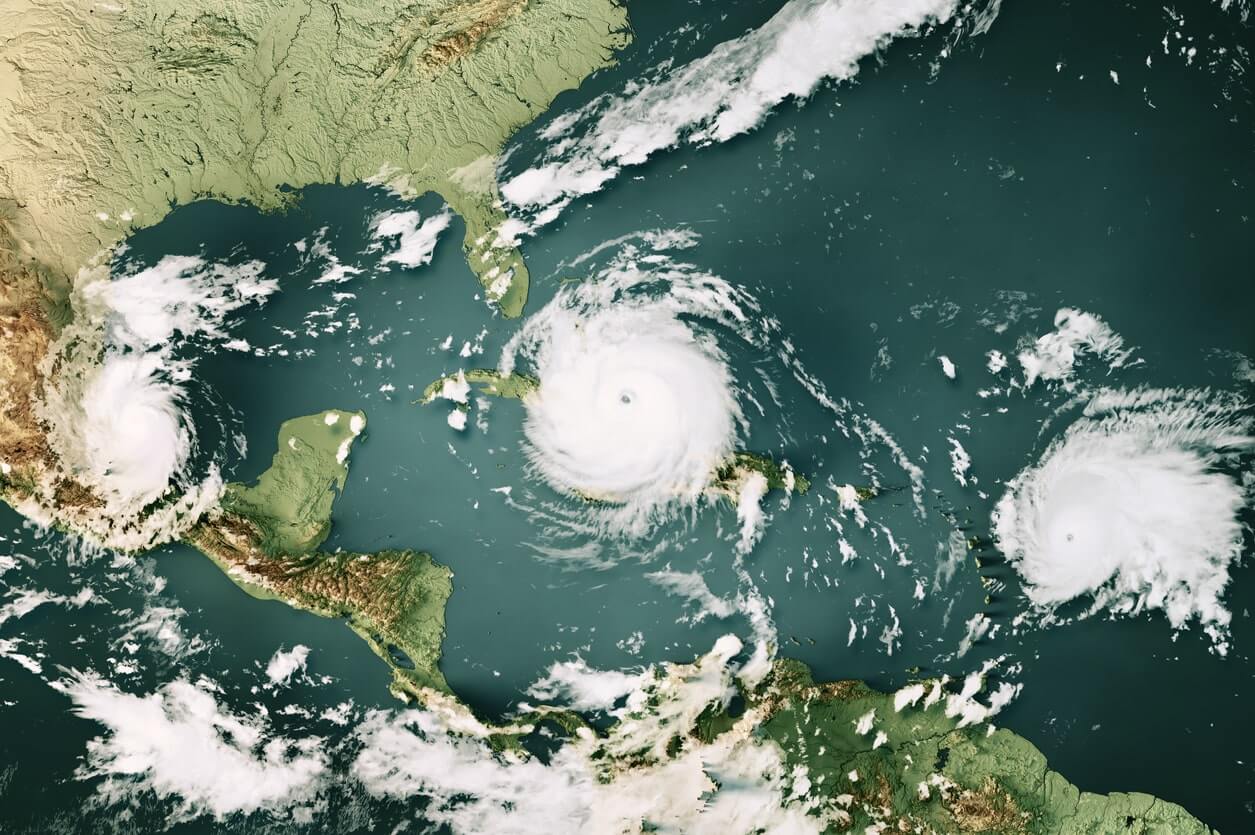
How Vulnerable Is Your Home to Hurricane Damage?
No two Florida homes face the same level of hurricane risk. While every homeowner should prepare, factors such as your location, the age of your home, its construction, surrounding environment, and existing storm protection all influence how well it may withstand high winds and wind-borne debris. Understanding your home’s unique risk profile is the first step toward making smart, cost-effective protection decisions.
Hurricane Risk Assessment Checklist
Use the checklist below to evaluate your home’s potential vulnerability:
☐ Proximity to the Coast and Wind Exposure: Whereas all homes in Florida should consider protection from high winds and driving rain, if you’re along the coastline in Evacuation Zone A as determined by your county, non-elevated homes should consider flood protection as well. Homes more inland primarily need to be concerned with hurricane force winds and debris which can come from most any direction.
☐ Home Age & Building Standards: When was your home built, and what level of hurricane protection was included? Even newer homes built under modern building codes may not include the highest-rated impact windows, doors, shutters, or other storm protection features, making it important to understand exactly how your home is protected.
☐ Windows & Doors: Are your openings protected with impact-rated products or approved hurricane protection?
☐ Large Glass Openings: Do you have expansive sliding glass doors or picture windows that require additional protection?
☐ Aging Home Features: As homes age, roofs, garage doors, and other exterior components can become more vulnerable to high winds. Have these areas been evaluated to determine whether repairs or upgrades are needed?
☐ Trees & Landscaping: Are there mature trees or loose outdoor items that could become wind-borne hazards?
☐ Previous Storm Damage: Has your home experienced hurricane or significant flood damage in the past?
☐ Insurance & Wind Mitigation: Have you had a recent wind mitigation inspection and reviewed your current insurance coverage?
☐ Emergency Readiness: Do you have a plan for securing your home whether you intend to shelter in place or evacuate before a storm, and recovering afterward?
What Hurricane Protection Does Your Home Actually Need?
The right hurricane protection depends on your home’s design, your lifestyle, your budget, and the level of convenience you expect. Some homeowners prioritize year-round protection and aesthetics, while others are looking for the most economical solution. Understanding the strengths of each product will help you choose a system or combination of solutions that protects your home today while meeting your long-term needs.
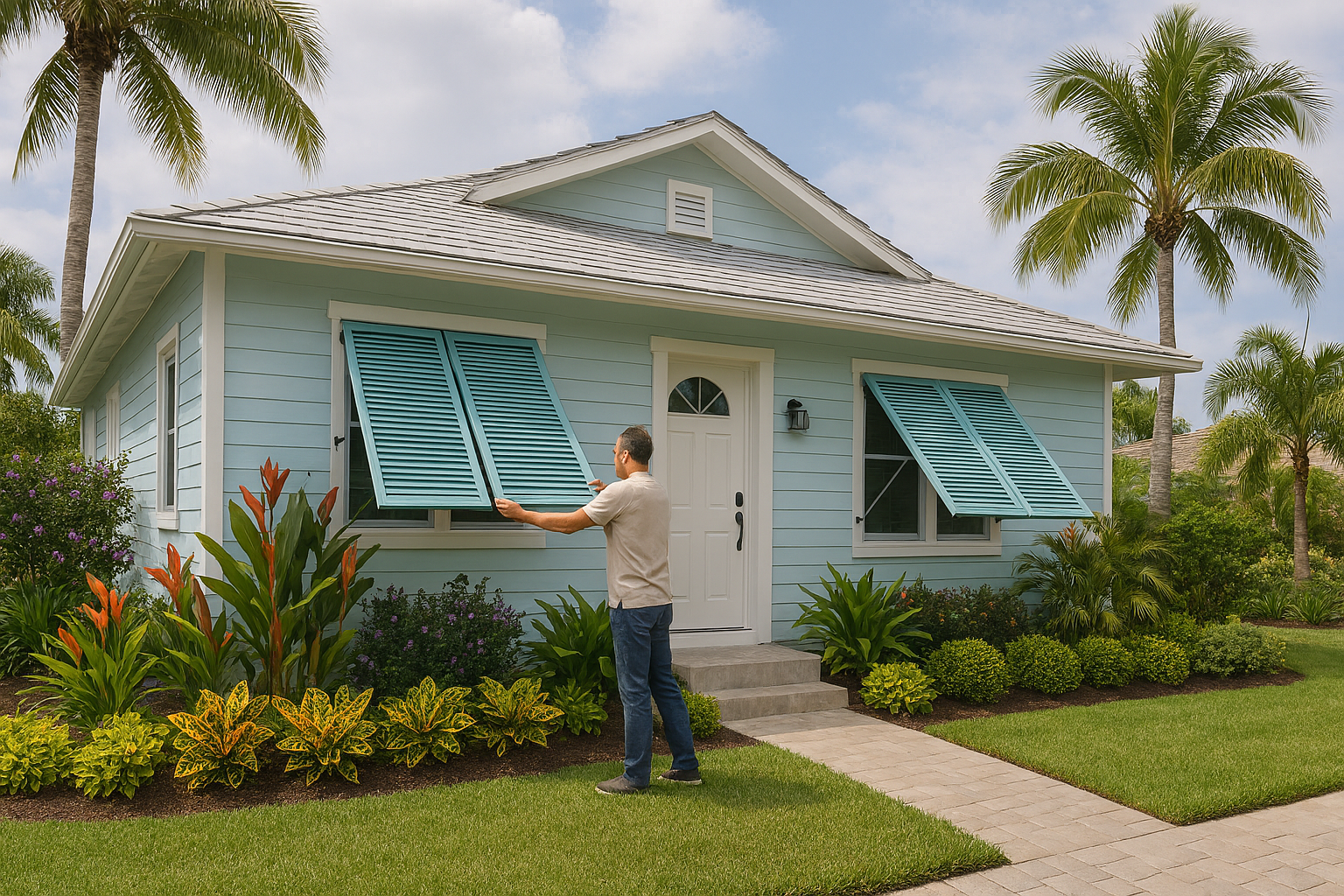
Storm Shielder’s Hurricane Protection Solutions
We categorize hurricane protection into three types: Deployable (Stored somewhere inside the house, most affordable), Permanent (Affixed to the house) and Impact-rated glass. Deployable protection involves anchors being installed on each side of or above and below the opening to be protected, and the protection itself is stored in a garage, shed or someplace inside the home. When a storm is approaching the homeowner will need to retrieve the protection and affix it to the anchors with wingnuts or sidewalk bolts that were provided at the time of installation. Deployable protection generally consists of corrugated panels made of aluminum, steel or clear, see-through polycarbonate. Deployable protection can also be panels of woven polyurethane screen (sometimes including synthetic fibers of aramid which is the generic word for Kevlar), or other fabric.
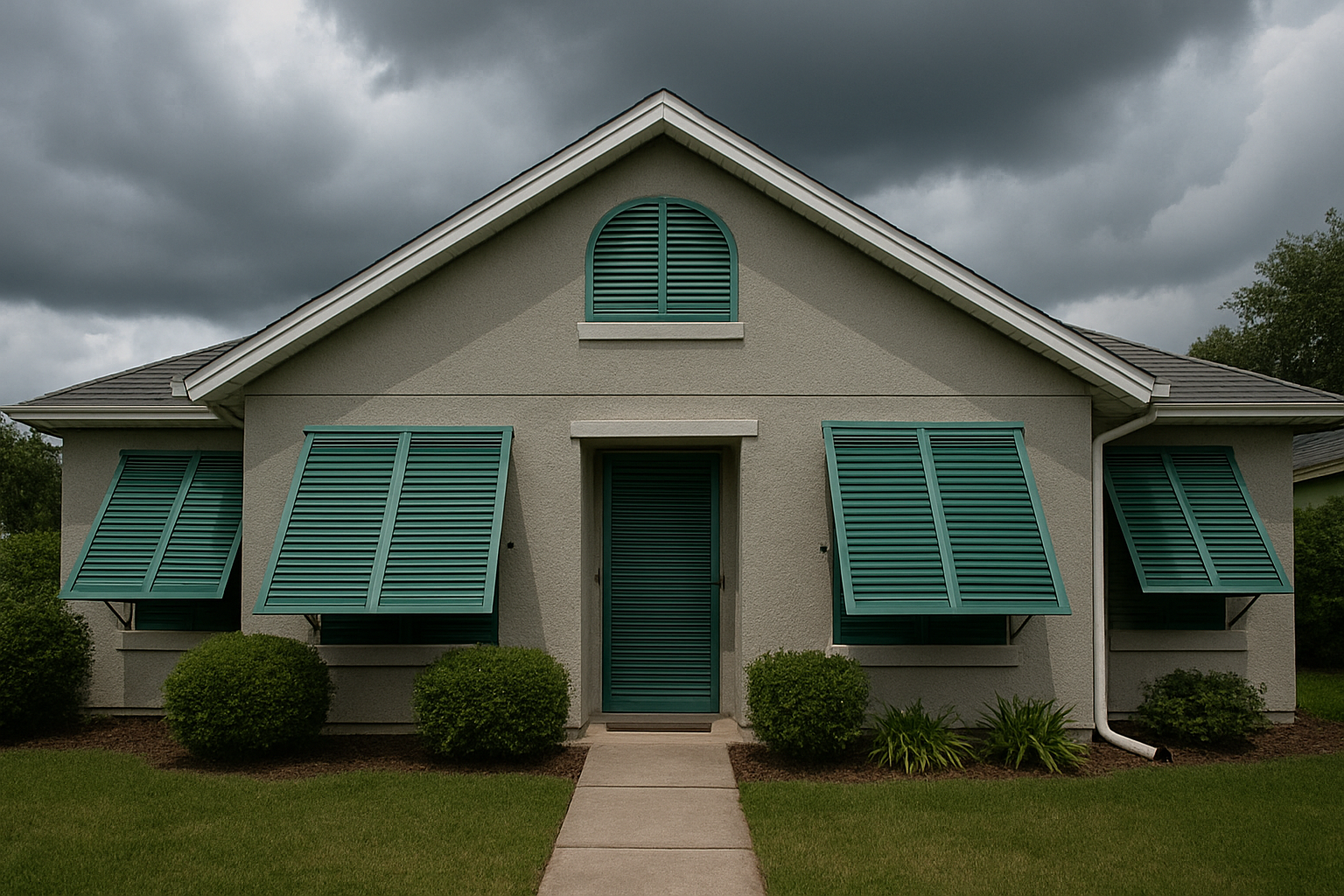
Permanent hurricane protection is affixed to the home or other building year-round, so for this reason it can generally be deployed quickly. Available permanent protection options are Accordion shutters, Bahama (or Bermuda) shutters, Colonial shutters, and Roll-down shutters which can have protectionary curtains made of either aluminum slats or woven polyurethane screen.
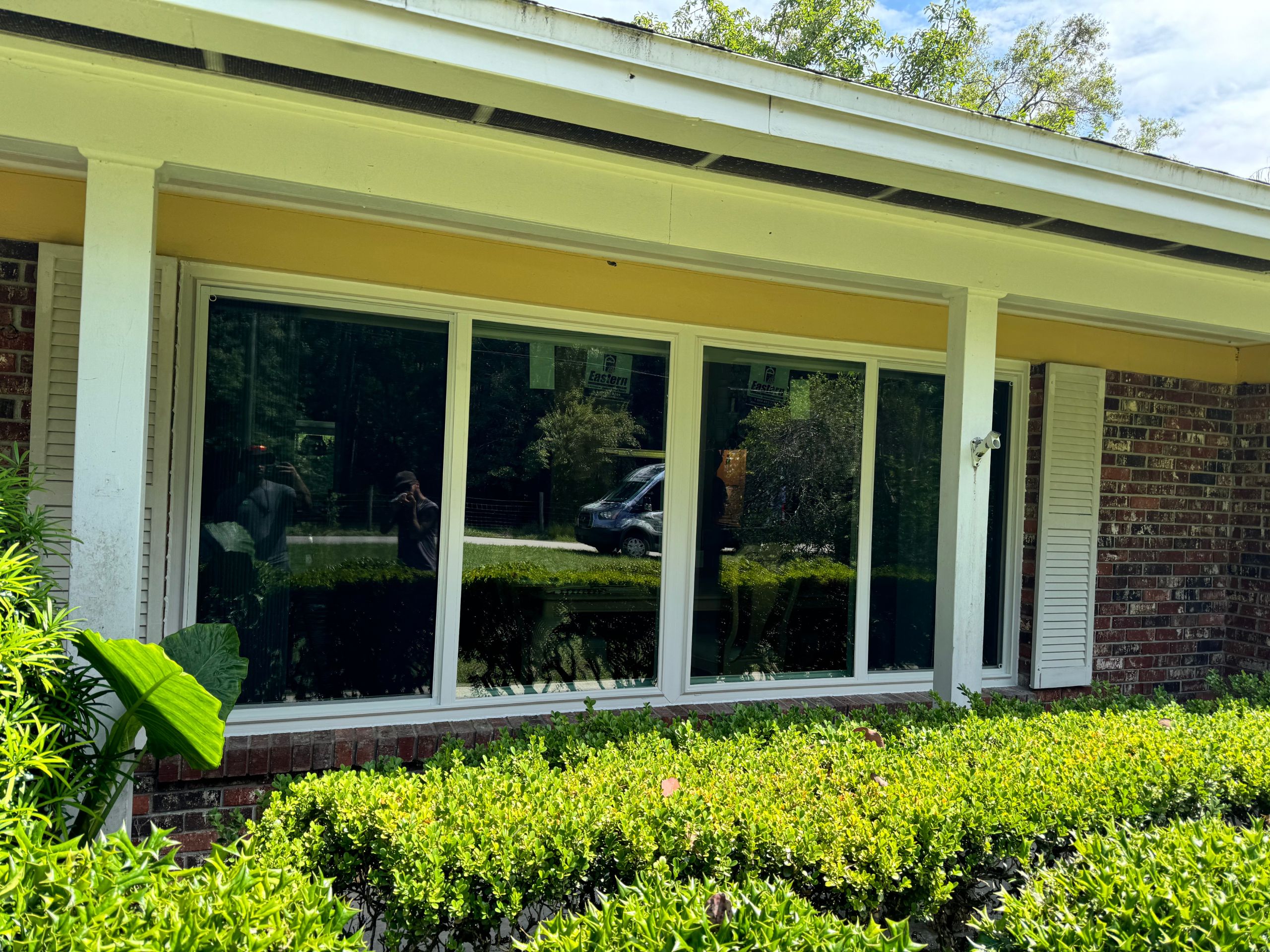
Impact Glass are windows and sliding glass (and other doors) that look and operate like regular windows. But, they have an additional double pane of glass with a laminate layer in the middle that has been tested to withstand hurricane winds and debris.
Each option offers different benefits regarding appearance, cost, convenience, and deployment time.
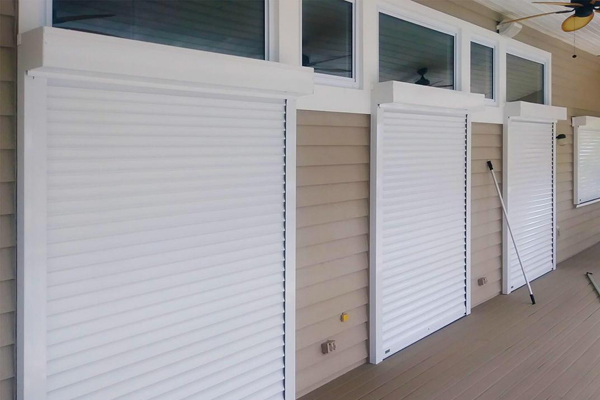
HURRICANE SHUTTERS
HURRICANE SHUTTERS
Permanent hurricane shutters provide dependable protection for windows and doors and are available in several styles to complement your home. Options such as roll-down, accordion, Bahama, and Colonial shutters offer varying levels of convenience, appearance, and ease of deployment depending on your preferences.

HURRICANE SCREENS
HURRICANE SCREENS
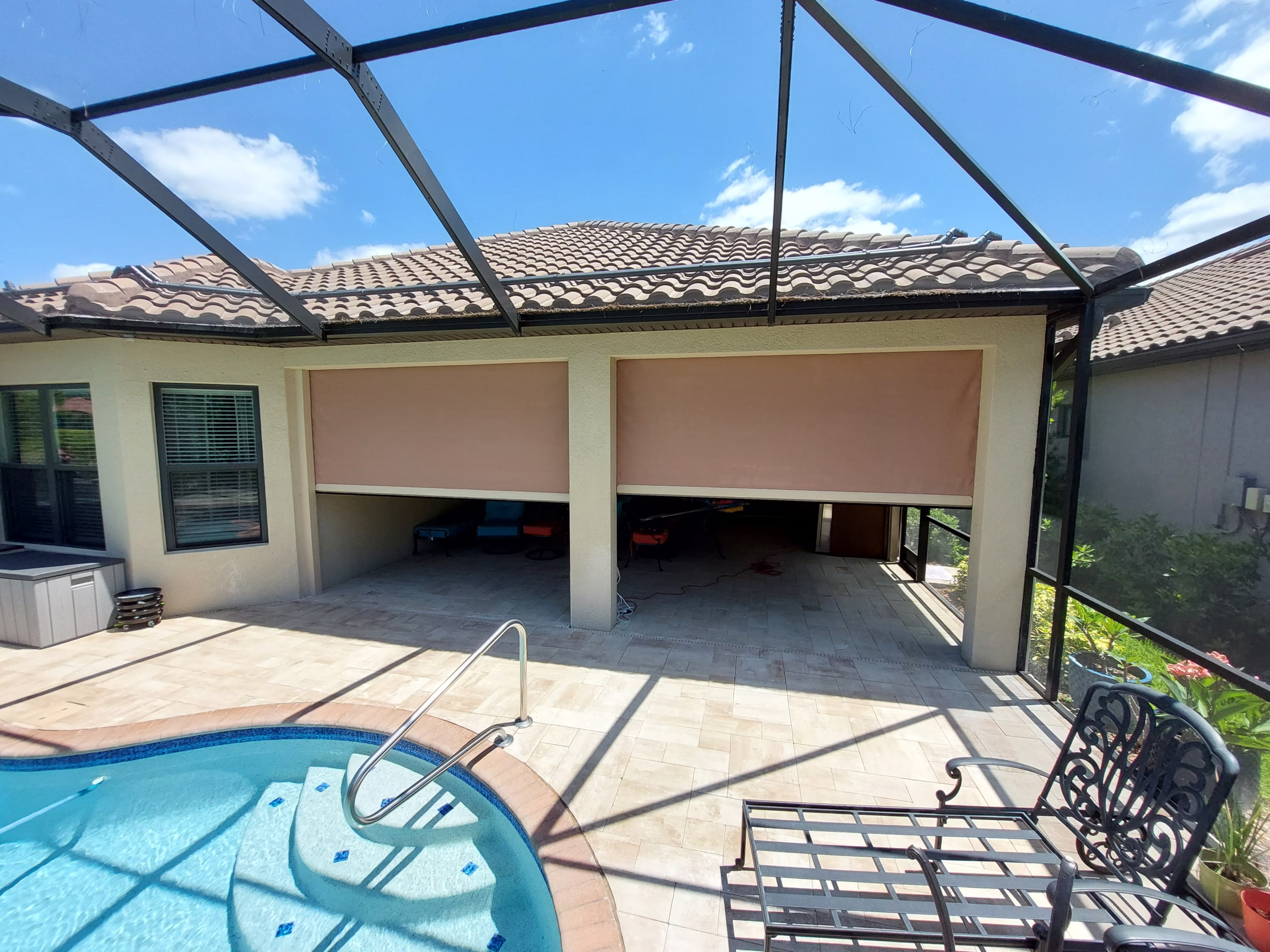
Hurricane screens are an excellent solution for protecting large openings such as lanais, patios, outdoor living areas. Available in both manual and motorized roll-down systems, they help defend against high winds, driving rain, and flying debris while preserving your outdoor living experience.
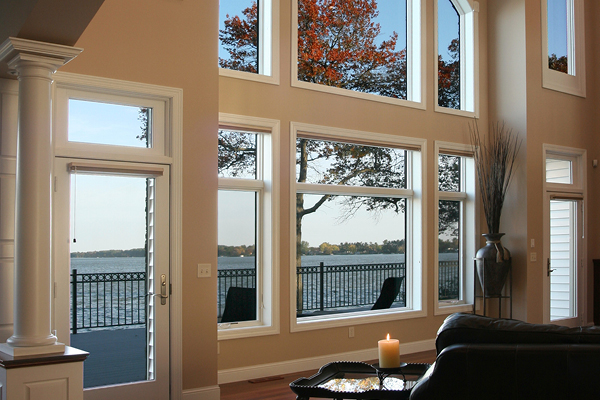
IMPACT-RATED HURRICANE WINDOWS
IMPACT-RATED HURRICANE WINDOWS
Impact windows provide continuous, year-round protection without requiring installation before each storm. In addition to resisting wind-borne debris, they offer everyday benefits such as improved energy efficiency, noise reduction, UV protection, and enhanced home security.

HURRICANE PANELS
HURRICANE PANELS
For homeowners seeking a cost-effective option, removable hurricane panels offer strong storm protection when installed before an approaching hurricane. Available in aluminum, clear polycarbonate, and fabric systems, they provide flexibility while remaining one of the most economical hurricane protection solutions.
Which Solution Is Best?
There is no single “best” hurricane protection product—only the solution that best matches your home and priorities. Many Florida homeowners choose a combination of products, such as impact windows on the most visible areas of the home, hurricane screens for lanais, and shutters or panels on secondary/less noticeable openings. A professional evaluation can help determine the ideal balance of protection, convenience, aesthetics, and investment for your specific home.
Hurricane Shutters vs. Impact Windows: Which Protection Is Right for Your Home?
Choosing hurricane protection isn’t simply about finding the “best” product—it’s about selecting the solution that best fits your home’s design, lifestyle, and, of course, your budget. Hurricane shutters and impact-rated windows each offer unique advantages, and many Florida homeowners ultimately choose a combination of both to maximize protection, convenience, and everyday enjoyment.
Hurricane Shutters |
Impact-Rated Windows |
| Best For
Most any door or window in the home, as well as large lanais, patios, balconies, outdoor kitchens, expansive glass openings (like sliding glass doors), and garage openings. |
Best For
24/7 protection for windows and exterior glass throughout the home. |
| Protection
Designed to resist hurricane-force winds, driven rain, and wind-borne debris while protecting the openings, windows, and doors behind them. |
Protection
Laminated impact glass remains in place even when struck by debris, helping maintain the building envelope. |
| Everyday Benefits
Can provide shade, reduce glare, heat, improve privacy, and security. |
Everyday Benefits
Improves energy efficiency, reduces outside noise, blocks UV rays, and enhances home security year-round. |
| Deployment
Available in manual and motorized systems that can be deployed as storms approach. |
Deployment
Always in place—no preparation required before a storm. |
| Appearance
Can retract when not in use, preserving outdoor views and architectural aesthetics. |
Appearance
Looks like traditional premium windows with no visible storm protection components. |
| Maintenance
Periodic inspection, cleaning, and lubrication. |
Maintenance
Maintained similarly to standard residential windows. |
| Investment
Excellent value for protecting oversized openings, large outdoor living spaces (and the doors and windows behind them). |
Investment
Higher upfront investment with continuous protection. |
| Negatives
Must be deployed ahead of a storm. May not blend perfectly with your home’s aesthetics. |
Negatives
May leak during storms when rain is driven by high winds. May require replacement if outer pane of “sacrificial glass” is damaged. |
| Ideal Homeowner
Someone looking to protect a home with various budget-friendly options. |
Ideal Homeowner
Someone seeking permanent, low-maintenance protection with everyday performance benefits. |
Storm Shielder’s Perspective
Rather than asking which product is better, the more significant question is which products make the most sense for each area of your home. We believe there isn’t a singular “perfect solution” for homeowners to protect their homes, because oftentimes homeowners choose a combination of hurricane protection options. For example, many homeowners install impact rated windows for the street-facing side of their house, install roll down hurricane screens on their lanais and balconies, and choose budget-friendly options for the sides of their home, like accordion shutters or deployable panels.
Planning Your Budget & Installation Timeline
Understanding the cost of hurricane protection is about more than comparing quotes. Home size, product selection, customization, permitting, and installation schedules all influence your investment. Planning ahead—well before hurricane season—gives you the best selection of products, shorter installation timelines, and greater peace of mind before the next storm arrives.
Typical Planning Considerations
| Factor | What Homeowners Should Know |
| Home Size | Larger homes with more windows and doors typically require a greater investment. However, some homeowners choose to divide it up over multiple years. |
| Home Design | A home’s structure and composition may alter the protection options. For example, in Florida, many 2-story homes are made of concrete block on the ground floor, and wood on the second floor. Or a home’s architecture may have low eaves or other obstructions near a window. For these reasons protection that is installed easily in one area of a home may need to be swapped for different protection in another area. |
| Product Selection | Hurricane screens, shutters, impact windows, and panels each have different price points and installation requirements. |
| Customization | Motorized systems, custom colors, specialty openings, and architectural features may increase investment. |
| Permitting | In Florida, hurricane protection systems require local permitting and inspections. However, a permit exemption is available for projects under the following conditions:
|
| Lead Times | Custom-manufactured products may require several weeks before installation. Relatedly, the fastest production times and greatest opportunity to receive more favorable pricing occurs outside of hurricane season, from December to March. |
| Installation Schedule | Once product has been shipped and received, most hurricane protection projects can be completed in a single day. Installation of impact rated windows generally takes longer, depending on the number of windows to be replaced. |
| Peak Season Demand | Demand increases as homeowners prepare in Spring and early Summer for Hurricane Season, often resulting in longer wait times. It’s always better to order hurricane protection long before it’s needed. |
| Financing Options | Many professional hurricane protection installation companies, like Storm Shielder, offer financing options. Additionally, the state of Florida can supply grants to harden homes to the My Safe Florida Home Program. |
Planning Checklist
✔ Begin researching several months before hurricane season.
✔ Request a professional home assessment.
✔ Compare long-term value—not just upfront cost.
✔ Ask about financing and insurance savings.
✔ Schedule installation before peak demand begins.
Choosing the Right Hurricane Protection Company
The quality of the installation is just as important as the quality of the product. Even the best hurricane protection system must be properly engineered, permitted, and installed to perform as intended. Choosing an experienced, reputable contractor helps ensure your investment protects your home when it matters most.
Contractor Evaluation Checklist
Questions to Ask
□ Does the contractor specialize in hurricane protection rather than offering it as a side service?
□ Is the contractor properly licensed and insured?
□ Are installations performed by the contractor’s own employees or do they use sub-contractors?
□ Are products Florida building code-approved for use in your area?
□ Will they perform an on-site consultation and provide different options for protection?
□ Will they obtain all necessary permits and coordinate inspections?
□ How many years of experience do they have in installing hurricane protection?
□ Can they explain the advantages and limitations of each product—not just recommend one solution?
□ Do they provide manufacturer warranties and workmanship warranties?
□ Can they provide local references and completed projects?
□ Do they offer ongoing service and maintenance after installation?
A Trusted Contractor Should…
- Educate and not use high-pressure sales tactics before selling.
- Recommend the right solution—not the most expensive one.
- Be able to explain product capabilities, advantages, and disadvantages.
- Communicate clearly throughout the project.
- Stand behind both the product and the installation.
- Be highly experienced in installing hurricane protection.
- Utilize in-house employees for installation.
How to Prepare Before a Hurricane Arrives
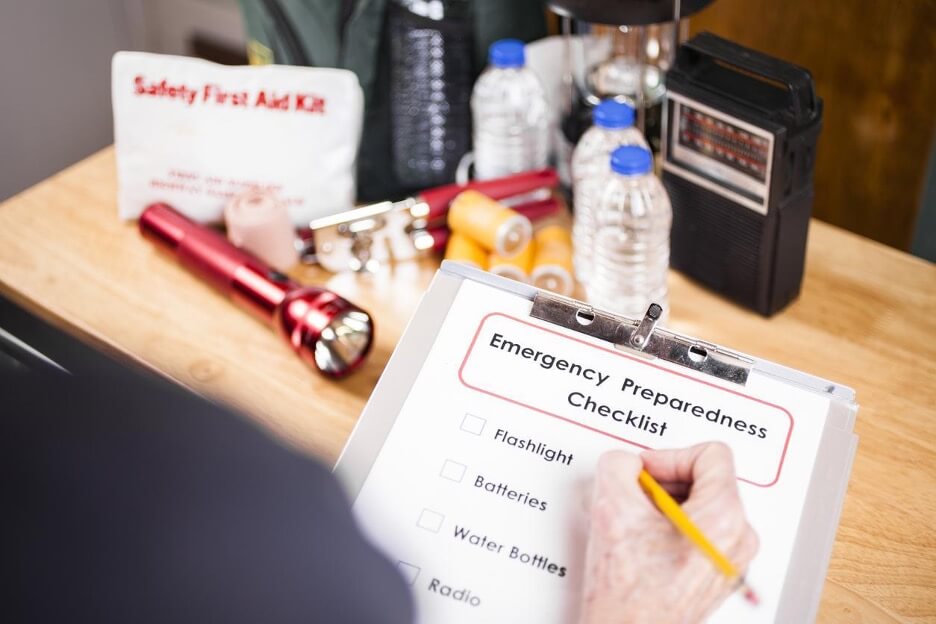
Even the best hurricane protection system is only one part of a complete storm preparedness plan. Having a clear checklist before a storm approaches can help reduce property damage, improve safety, and make the recovery process easier. Preparation is most effective when completed well before watches and warnings are issued.
Hurricane Preparation Timeline
| When | Recommended Actions |
| Before Hurricane Season | Inspect storm protection systems (or place order for protection you may lack), trim trees, review insurance coverage, replenish emergency supplies, and confirm your family’s emergency plan. |
| 72 Hours Before Expected Impact | Monitor official forecasts, refill necessary prescriptions, gather important documents, and begin securing outdoor furniture. |
| 48 Hours Before Expected Impact | Deploy hurricane shutters or screens, fuel vehicles, charge devices, move valuables away from windows, secure garbage cans and decorative items, and verify emergency communications. |
| 24 Hours Before Expected Impact | Complete final preparations, avoid unnecessary travel, follow local emergency guidance, and be ready for changing conditions. |
Last-Minute Hurricane Checklist
✔ Install and secure all hurricane protection systems.
✔ Bring patio furniture, grills, and yard decorations to a secure area.
✔ Trim or remove loose branches when safe.
✔ Charge phones, batteries, and backup power sources.
✔ Stock food, water, medications, and pet supplies.
✔ Review evacuation routes and emergency contacts.
✔ Stay informed using trusted local weather and emergency management resources.
Storm Shielder’s Perspective
The best hurricane protection strategy begins BEFORE Hurricane Season—with thoughtful planning, quality products, expert installation, and a preparedness plan your family can rely on. Investing the time to prepare today can help protect your home, reduce stress, and provide greater confidence throughout every hurricane season.
Find the Right Hurricane Protection for Your Home
Every Florida home is different. Schedule a complimentary consultation with a Storm Shielder expert to evaluate your home’s unique needs and receive personalized recommendations designed to protect your family, property, and investment.
Frequently Asked Questions About Florida Hurricane Protection
Do all homes in Florida need hurricane protection?
Yes. Homeowners near the coast or in flood prone areas should consider both flood protection and hurricane protection. Additionally, every Florida homeowner should evaluate how their home will perform during hurricane-force winds. Hurricanes can produce damaging winds, flying debris, and heavy rain much further inland than where they make landfall, as hurricanes have crossed the middle of the State on many occasions. Also, hurricanes regularly cause tornadoes to form far inland as well.
Key considerations:
✔ Hurricane Season occurs in the Atlantic and the Gulf every year from June 1 through November 30.
✔ Hurricane force winds often extend well beyond the eye of the storm.
✔ Windows, doors, garage doors, and roofs are among the home's most vulnerable features.
✔ Investing in protection before hurricane season provides more protection options and shorter installation lead times.
Is hurricane damage only a concern for homes near the coast?
No. As mentioned above, though coastal homes face additional risks such as storm surge and saltwater exposure, hurricane-force winds and wind-borne debris can affect communities many miles inland. Every homeowner in Florida should evaluate their home's ability to withstand severe weather.
Hurricane risk extends beyond the coastline:
✔ Hurricane-force winds can travel well inland.
✔ Falling trees and flying debris are common causes of property damage.
✔ Inland flooding and tornadoes frequently accompany hurricanes.
✔ Every Florida homeowner should understand their home's wind vulnerability—not just its proximity to the coast.
How is hurricane protection different in Tampa Bay compared to other parts of Florida?
Tampa Bay presents a unique combination of hurricane risks. While South Florida often experiences stronger building requirements due to its history and proximity to the open Atlantic, the Tampa Bay region remains highly vulnerable to hurricane-force winds, storm surge along the coastline which can be further trapped within the Bay, as well as having significant population growth in coastal communities.
Tampa Bay homeowners should consider:
✔ Exposure to hurricanes that form in the Gulf or cross the state from the Atlantic, thereby approaching from multiple directions.
✔ Coastal or low-lying neighborhoods with storm surge potential.
✔ Inland neighborhoods that remain vulnerable to damaging winds.
✔ Home age, Building Code in effect at time of home’s construction, and existing storm protection—not just home’s proximity to the coast.
The right protection strategy depends on your home's location, construction, and individual risk profile.
What's the difference between hurricane screens, hurricane shutters, and impact windows?
Each product protects your home differently.
| Product | Features |
| Hurricane Screens |
|
| Hurricane Shutters |
|
| Impact Windows |
|
Many homeowners combine multiple products to create a customized protection strategy.
Are impact windows enough, or do I still need shutters?
Yes, impact windows are enough to provide protection from hurricane force winds penetrating a home. However, they are not as effective at keeping rains driven by high winds from entering the home, and there is the risk that if an object were to break the window during a storm, the window will most likely need to be replaced. Shutters can protect windows from breaking, while protecting the house at the same time.
Can hurricane protection lower my homeowner’s insurance?
It may. Many insurance companies consider features that improve a home's resistance to hurricane damage when determining premiums. Eligibility varies by carrier, property, and installed products. Always verify discount eligibility directly with your insurance company, which is generally 100% of a home’s openings must be protected, and verified with a professional wind inspection report.
How long does it take to install hurricane protection?
Every project is different. Product selection, manufacturing lead times, permitting, and installation schedules all influence the overall timeline. Usually installations take a single day, but depending on time of year, manufacturing times can be from one to three months.
Typical factors include:
✔ Product availability
✔ Custom manufacturing requirements
✔ Local permit approval
✔ Home size and complexity
✔ Seasonal demand
Planning before hurricane season generally provides the greatest scheduling flexibility.
Can I protect just one side or part of my home?
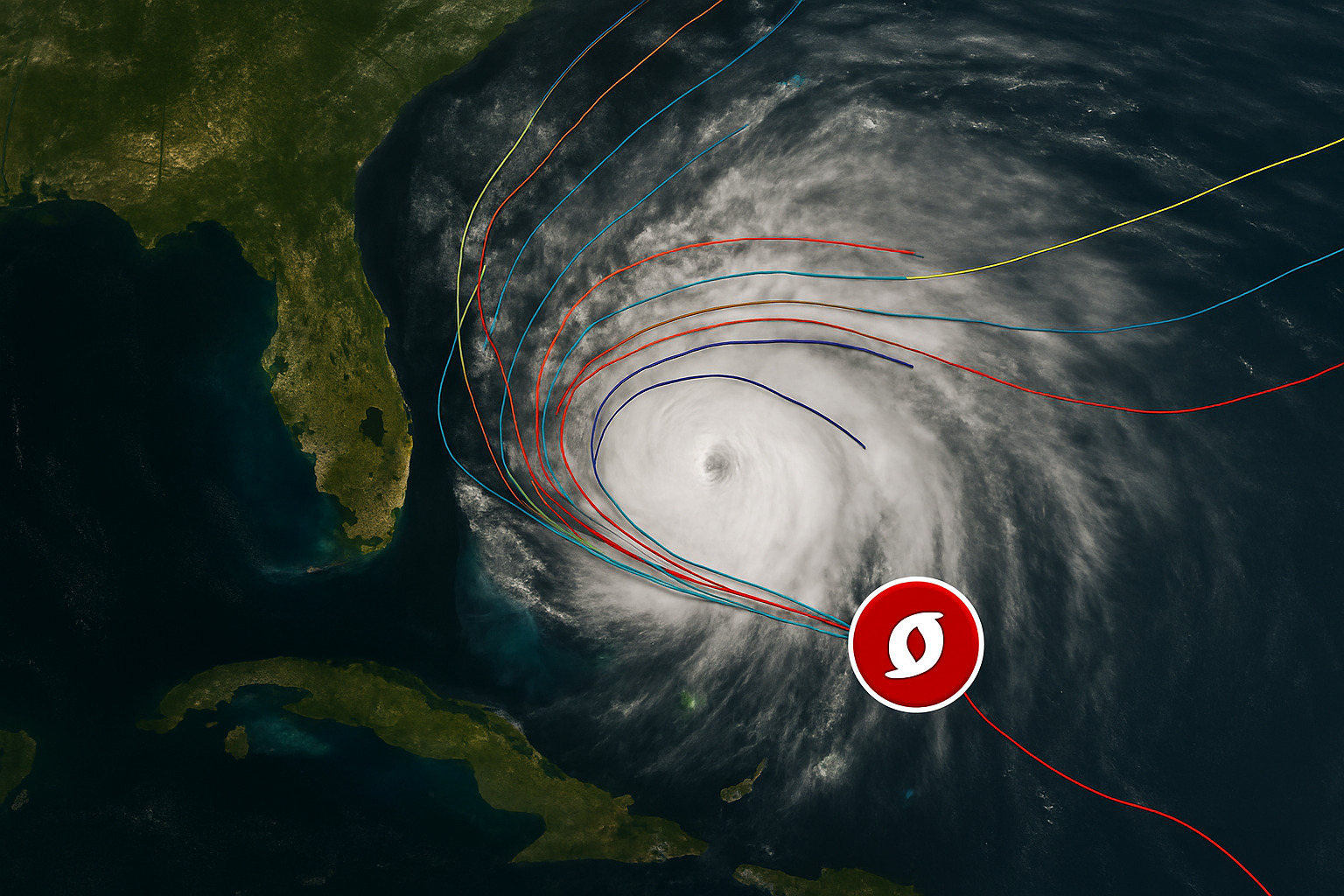
Since hurricanes spin counterclockwise, and can approach from the East, West, or South, the direction of wind (and debris) can differ from when a storm approaches your home than when a storm moves away from your home. Additionally, most insurers require that 100% of a home’s openings are protected before they will offer any discounts.
What should I look for when choosing a hurricane protection company?
The contractor you choose is just as important as the product itself. Proper engineering, permitting, and installation all contribute to how well a protection system performs during a storm.
Before hiring a company, verify:
✔ Proper licensing and insurance
✔ Florida-approved products
✔ Local installation experience
✔ Permit and inspection management
✔ Manufacturer and workmanship warranties
✔ Positive customer reviews and references
✔ Clear communication and detailed proposals
✔ Trained installers who are employees of the contractor you select
Choose a company that educates first and recommends solutions based on your home's needs rather than a one-size-fits-all approach.
When is the best time to install hurricane protection?
The best time is before hurricane season begins. It is virtually impossible to provide professionally installed hurricane protection as a storm is approaching. Naturally, installations of protection happen with shorter lead times during the offseason than during Hurricane Season itself.
A typical timeline:
| Timeframe | Recommended Action |
| December – February | Research products and schedule consultations, and finalize product selection |
| March – April | Hire vendor to proceed with permitting, and installation so that installation is performed before hurricane season |
| May – November | Stay informed and deploy protection as needed before storms |
| Ongoing | Perform inspections and maintenance (don’t wait until right before a storm approaches) |
Planning ahead allows homeowners to make informed decisions rather than rushed ones during an active storm threat.