
Understanding the Financial Side of Hurricane Protection
Every homeowner wants to protect their home without overspending. Whether you’re considering hurricane screens, shutters, impact windows, or a layered protection strategy, understanding the financial tradeoffs is essential. Explore costs, financing, insurance incentives, and long-term value to determine the investment that’s right for your home.
Request a Call
Six Factors That Maximize Your Hurricane Protection Investment
The value of hurricane protection extends well beyond its installation cost. The smartest investments improve your home’s resilience while delivering lasting financial, practical, and lifestyle benefits. As you compare products and project scopes, consider these six factors that have the greatest influence on your long-term return on investment.

Risk Reduction
Protect your home from costly wind, water, and debris damage before the next major storm arrives.

Long-Term Durability
Choose products designed for many years of reliable performance with minimal maintenance and lasting structural integrity.

Insurance Savings
Eligible improvements may reduce insurance premiums while strengthening your home’s overall wind mitigation profile. Most insurance companies require 100% protection of the house before providing a discount.

Everyday Lifestyle Benefits
Many solutions improve security, energy efficiency, noise reduction, convenience, and year-round comfort beyond hurricane season.

Property Value & Marketability
Quality hurricane protection can enhance buyer confidence, curb appeal, and the long-term desirability of your home.

Right-Sized Investment Strategy
Prioritize improvements that match your home’s needs, budget, and long-term plans instead of paying for unnecessary upgrades.
Calculate the True Value of Your Hurricane Protection Investment
The lowest price doesn’t always represent the best value. A thoughtful cost-benefit analysis considers both the upfront investment and the long-term financial, practical, and lifestyle benefits. Before making a decision, evaluate the complete picture—not just today’s installation cost. Use the checklists below to compare products, estimate long-term value, and determine which investment best aligns with your home’s needs and financial goals.
Step 1: Estimate the Total Investment
When comparing proposals, look beyond the purchase price to understand the true cost of ownership.
Investment Checklist
☐ Initial Product Cost
Compare the cost of the different protection systems:
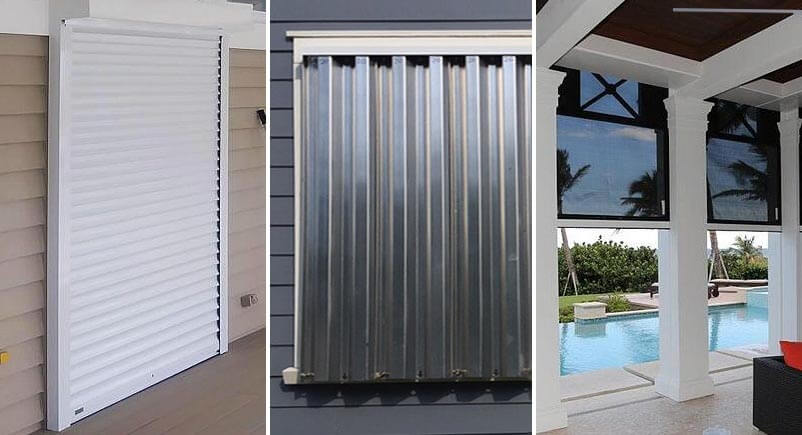
- Deployable – Least expensive options. Anchors professionally installed, but panels/fabric need to be removed from storage and attached ahead of a storm.
- Permanent – More expensive. Shutters/Screens can be put in place quickly by closing them manually (Crank/Pull/Flatten) or with the push of a button (Electric/Solar Battery powered).
- Impact Windows – Usually most expensive. Always deployed and can offer some energy and sound dampening benefits as well.
☐ Installation Costs
Include labor, customization, and project size and complexity—not just product pricing. Consider the installer’s online ratings and recommendations, as higher rated providers may merit higher pricing for quality of installation.
☐ Permitting & Inspections
Confirm whether permits, engineering, or inspections are included in the proposal.
☐ Maintenance Requirements
Understand cleaning, servicing, repairs, or replacement parts over the product’s lifespan.
☐ Expected Service Life
Consider how long the product is designed to perform before replacement becomes necessary.
☐ Financing Costs
If financing the project, include interest and monthly payments in your evaluation.
☐ Planned Upgrades
Determine whether you’re investing all at once or planning a phased protection strategy.
Step 2: Measure the Long-Term Benefits
The strongest return often comes from benefits you’ll experience for years—not just during hurricane season.
Value Checklist
☐ Reduced Storm Damage Risk
Lower the potential for costly repairs (and related lost time from pursuing contractors and insurance reimbursement) following severe weather events.
☐ Potential Insurance Savings
Ask your insurance carrier about wind mitigation discounts and qualifying improvements.
☐ Greater Home Value
Quality hurricane protection may enhance future buyer confidence and improve resale appeal.
☐ Lower Long-Term Ownership Costs
Durable, low-maintenance products can reduce repair and replacement expenses over time.
☐ Everyday Lifestyle Benefits
Consider energy efficiency, noise reduction, UV protection, security, and convenience.
☐ Peace of Mind
Permanent or easy-to-deploy protection can reduce stress and preparation before storms.
☐ Protection for What Matters Most
Safeguard your family, pets, home, belongings, and the investment you’ve worked hard to build.
Executive Takeaway
The smartest hurricane protection investment isn’t necessarily the least expensive or the most comprehensive—it’s the one that delivers the greatest overall value for your home. By weighing both costs and long-term benefits, you can make a more informed decision that balances resilience, convenience, financial investment, and confidence for years to come.
Four Smart Ways to Invest in Hurricane Protection
Not every homeowner needs the same investment strategy. Your home’s age, budget, location, and long-term plans should influence how you prioritize improvements. These four approaches can help you build a hurricane protection strategy that aligns with both your financial goals and your home’s needs.

1. Start with the Highest Risk Areas
Protect the largest and most vulnerable openings first.

2. Phase Improvements Over Time
Spread investments across multiple years while steadily improving protection. Don’t let salespeople convince you that your project must be done all at once.

3. Invest in Long-Lasting Solutions
Consider products that provide years of value with minimal ongoing maintenance.

4. Consider your Ownership Timeframe
Evaluate how long you expect to own your home, in conjunction with the costs, insurance savings, durability, and resale—not just installation price.
Compare Hurricane Protection Investment Strategies
Every homeowner approaches hurricane protection differently. Some focus on minimizing upfront costs, while others prioritize long-term resilience, convenience, and financial value. Neither approach is inherently right or wrong—the best strategy depends on your goals, budget, and risk tolerance. Use the comparison below to understand the tradeoffs before deciding how much to invest in protecting your home.
| Decision Area | Minimize Initial Cost | Maximize Long-Term Value |
| Primary Goal | Spend as little as possible today | Make a long-term investment |
| Typical Budget | Limited; prioritize function over convenience | Larger investment with a comprehensive strategy |
| Protection Strategy | Protect highest-risk openings first | Develop protection strategy for the entire home |
| Product Selection | Lower-cost deployable or phased solutions | Best-fit products based on performance and lifestyle |
| Insurance Benefits | May qualify for discounts if entire home is protected | Permanent installations offer greater opportunity to maximize wind mitigation benefits |
| Maintenance | Typically lowest maintenance protection | Occasional long-term maintenance required for permanent products and windows |
| Storm Preparation | More manual deployment required ahead of storms | Greater convenience with permanent or easy-to-deploy protection |
| Everyday Benefits | Generally used only for storm protection | Improved security, comfort, energy efficiency, and noise reduction |
| Property Value Impact | Protects value | May enhance marketability and buyer confidence |
| Best For | Budget-conscious homeowners or phased improvements | Long-term homeowners seeking resilience and convenience |
Pros & Considerations
Strategy 1: Minimize Initial Cost
Advantages
✔ Lowest upfront investment
✔ Flexible phased upgrade approach
✔ Can address highest-priority openings first
✔ Affords entire home protection at lower cost
Considerations
- Greater preparation/effort required before each storm
- Additional cost if outside service is hired to deploy protection
- Future replacement cost when homeowner desires less manually intensive deployment
- Potentially fewer insurance benefits
Strategy 2: Maximize Long-Term Value
Advantages
✔ Comprehensive home protection
✔ Greater everyday convenience
✔ Potential insurance and resale benefits
✔ Designed to perform for many years
Considerations
- Higher initial investment
- Potentially more extensive project planning
- Financing may be desired for larger projects
- Return on investment is realized over many years
Executive Perspective
The goal isn’t to spend the most—it’s to invest the amount that’s right for your home and your budget. Some homeowners benefit from a phased approach or least expensive whole-home strategy, while others realize greater long-term value by completing a comprehensive project from the outset. The best investment strategy balances your home’s risk profile, financial objectives, lifestyle, and timeline.
Is a Premium Hurricane Protection Investment Right for You?
Not every homeowner needs to invest in the same types of hurricane protection. The right investment depends on your home’s value and location, and your lifestyle and long-term plans. If several of the situations below describe you, investing in more comprehensive protection may deliver greater financial and practical value over time. As all homes in Florida can experience high winds and rain from hurricanes, consider the following statements as they apply to your situation:
Checklist
✔ You plan to remain in your home for 5+ years.
✔ You own a luxury or custom home.
✔ You have large glass openings or expansive outdoor living spaces.
✔ Convenience and speed of deployment before storms is a high priority.
✔ You’re looking to maximize insurance and resale value.
✔ You prefer permanent, lower-maintenance solutions.
✔ You want one comprehensive investment rather than multiple future projects.
Choose the Right Contractor—Not Just the Lowest Price
The effectiveness of your hurricane protection depends on more than the products you select. The contractor you choose will influence product recommendations, installation quality, code compliance, warranty support, and your overall investment. Before making a decision, take time to research qualified professionals, compare proposals thoughtfully, and ask questions that help you understand value—not just price.
Build a Short List of Qualified Contractors
Start Here
Before requesting estimates, identify companies with a proven track record and experience installing hurricane protection in your area.
Contractor Checklist
☐ Verify licensing and insurance.
☐ Confirm experience with your preferred protection systems.
☐ Review online ratings and customer testimonials.
☐ Confirm installers are trained in-house employees (not sub-contractors).
☐ Look for completed projects similar to your home.
☐ Confirm contractor manages permitting and inspections.
☐ Confirm warranty coverage for both products and workmanship.
☐ Choose companies with an established local presence and long-term service capabilities.
Ask Questions That Lead to Better Recommendations
Don’t Just Ask “How Much?”
The best consultation should feel educational—not like a sales presentation. A knowledgeable contractor should help you understand your options and explain why one solution may be a better fit than another.
Questions to Ask
✔ Why are you recommending this product for my home?
✔ What alternatives should I also consider?
✔ If this were your home, what would you choose—and why?
✔ Which products provide the best long-term value?
✔ Where would you recommend investing more?
✔ Where could I save money without significantly reducing protection?
✔ What maintenance should I expect?
✔ How will this affect insurance and resale value?
Compare Value—Not Just Price
Evaluate the Entire Proposal
Two proposals with similar prices may deliver very different levels of value. Look beyond the bottom line to understand exactly what you’re receiving.
Proposal Comparison Checklist
☐ Compare Product specifications.
☐ Scope of work and installation quality.
☐ Warranty length and coverage.
☐ Permit and inspection responsibilities.
☐ Project timeline.
☐ Expected maintenance or service requirements.
☐ Financing options.
☐ Long-term ownership costs.
☐ Overall confidence in the contractor.
Have an Open Financial Conversation
A Good Contractor Helps You Invest Wisely
The best contractors aren’t simply trying to maximize the project—they’re helping you maximize value. Be transparent about your priorities and budget so they can recommend solutions that fit your goals.
Topics to Discuss
☐ “My target investment range is…”
☐ “What would you recommend if this were your own home?”
☐ “Can this project be completed in phases?”
☐ “Which upgrades provide the greatest long-term value?”
☐ “What improvements are nice to have versus essential?”
☐ “How would you prioritize these improvements if we reduced the budget by 20%?”
☐ “What financing or incentive programs should I consider?”
Executive Takeaway
The best hurricane protection projects begin with a trusted conversation—not a sales pitch. Choose a contractor who educates before recommending, explains tradeoffs instead of promoting a single solution, and helps you invest confidently based on your home’s unique needs, budget, and long-term goals. A quality contractor should leave you feeling informed, not pressured, and confident that every dollar is being invested where it creates the greatest value.
Make Your Hurricane Protection Investment with Confidence
Whether you’re just beginning your research or ready to move forward, our experienced team will help you evaluate solutions and invest with confidence.
Frequently Asked Questions About Investing in Hurricane Protection
How much should I budget for hurricane protection?
There is no one-size-fits-all budget because every home has different characteristics and risks, and every homeowner has different requirements and desires. Rather than selecting a budget first, begin by evaluating what you're trying to protect and the level of resilience you want to achieve.
Factors that influence your investment include:
✔ Size of the home
✔ Number and size of windows and doors
✔ Type of protection selected
✔ Architectural complexity
✔ Installation requirements
✔ Deployment requirements after installation
✔ Desired convenience and aesthetics
✔ Long-term ownership plans
Executive Perspective
The right investment is one that appropriately protects your home's value while fitting comfortably within your ability to deploy protection and financial goals. For many homeowners, consideration between deployable and permanent solutions can be an effective way to balance budget and protection.
What costs should I compare besides the quoted installation price?
The installation proposal is only part of the total investment. Looking beyond the initial quote often provides a much clearer understanding of long-term value.
Compare the complete cost of ownership:
✔ Product quality
✔ Installation labor and workmanship
✔ Warranty coverage
✔ Service after installation
✔ Product lifespan
✔ Financing costs
✔ Future cost of hiring an outside service to attach stored deployable protection
Executive Perspective
The lowest proposal isn't always the lowest lifetime cost. A slightly higher investment today to hire the most experienced, highly rated contractor may reduce issues, improve durability, and provide greater long-term value over the life of the product.
Are there hidden costs homeowners should ask about?
Sometimes, yes. A thorough proposal should clearly identify all anticipated costs before work begins.
Questions to ask your contractor:
☐ Are permits and inspections included?
☐ Will drywall, stucco, or trim repairs be necessary?
☐ Are electrical modifications required?
☐ Are disposal or cleanup costs included?
☐ What circumstances could increase the final price?
☐ What isn't included in this proposal?
Asking these questions upfront helps reduce surprises and allows you to compare proposals more accurately.
How long do hurricane protection products typically last?
In general, storm protection systems have reasonably long life-cycles. What may affect their longevity varies based on these factors:
✔ Product quality
✔ Florida coastal exposure
✔ Whether the product is motorized or manual
✔ Frequency or lack of use
✔ Maintenance schedule
✔ Future home upgrades that require the removal and reinstallation of the protection
Rather than asking, "How long will this last?" ask, "What will it cost to own and maintain over the next 20–30 years?" That question provides a much better measure of long-term value.
How can hurricane protection reduce my insurance costs?
Many qualifying improvements can improve your home's wind mitigation profile, which may result in insurance premium discounts. Savings vary based on your insurer, home characteristics, and installed products.
Before investing:
✔ Schedule a Wind Mitigation Inspection.
✔ Ask your insurance carrier what improvements qualify.
✔ Verify products meet applicable Florida approvals.
✔ Keep permits and product documentation.
✔ Explore programs for home hardening, such as the My Safe Florida Home Program.
Insurance savings should be viewed as one component of your overall return on investment—not the sole reason for investing.
One contractor is significantly less expensive than another. Should I choose the lowest bid?
Not necessarily.
Large price differences often reflect differences in contractor experience, product specifications, and properly identified project scope—not simply profit margin. The goal isn't to buy the lowest-priced project—it's to purchase the highest value for your investment.
Compare each proposal carefully:
✔ Unique product features
✔ Fully identified scope of work
✔ Installation details
✔ Warranty coverage
✔ Contractor and installer experience
✔ References and completed projects
✔ Service after installation
✔ Reputation and financial stability
What financing options are available for hurricane protection?
Many homeowners choose to finance hurricane protection to complete a more comprehensive project while preserving cash for other priorities.
Common financing options may include:
- Home improvement financing
- Home equity loans or HELOCs
- Cash-out refinancing
- Personal loans
- Manufacturer or contractor financing programs
When evaluating financing, compare monthly payments alongside the long-term benefits of improved protection, potential insurance savings, and avoiding future phased installation costs. The best financing solution is one that supports your overall financial plan without stretching your budget.
How should my home's value influence how much I invest?
One of the most overlooked considerations is matching your investment to the value and characteristics of your home. A thoughtful strategy helps ensure you're neither under-protecting nor over-investing.
Consider these questions:
✔ What is my home's current market value?
✔ How long do I expect to own this home?
✔ Is this my primary residence, seasonal home, or investment property?
✔ Would future buyers expect hurricane protection?
✔ Does my neighborhood typically include impact windows or other premium systems?
✔ How important are convenience and aesthetics to me?
✔ Would a phased approach make more financial sense?